Pikillacta
PIKILLACTA constituye un parque arqueológico nacional, incluye muchos lugares arqueológicos. Cubre un área de 3421 hectáreas (8453 acres), y se localiza en la provincia de Quispicanchis, hacia el este de la ciudad del Cusco aproximadamente a 32 Km. (20 millas), actualmente se llega por el camino pavimentado que lleva a Puno y Arequipa.
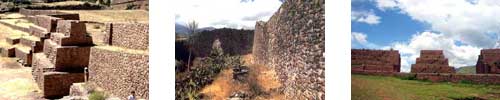
Al paso se encuentran los distritos de Oropeza, Lucre y Andahuaylillas, cerca de la laguna de Wakarpay que se encuentra a una altitud de aproximadamente 3200 mts. (10500 pies). En los andes del Perú hay aproximadamente 12000 lagos pequeños como Wakarpay, casi todas ellos tienen flora y fauna muy rica; normalmente tienen muchas cañas de totora que es el ambiente para los patos salvajes de diversas especies, gansos, flamingos, etc. se pesca también la trucha y el pejerrey. "Pikillaqta" es una palabra quechua compuesta que significa "pueblo piojoso" (piki = piojo; llaqta = pueblo); Sin embargo, ése no es el nombre original de la zona o el sitio principal, su nombre anterior es desconocido; aunque, muchos cronistas se refieren a esta zona con el nombre de "Muyuna", "Muyna" o "Mohina". parece que el sitio empezó llamándose "Pikillaqta" desde los últimos años de la época colonial o a principios de la república; su razón es desconocida. El sitio prehispánico de Pikillaqta se localiza a 3350 mts. (11000 pies) y perteneció a una ciudad de la Cultura Wari desarrollada en Ayacucho actual. La Cultura de Wari es una mezcla de elementos culturales de los Warpa, Nazca y civilizaciones de Tiawanako. Se emprendió la salida de su expansión territorial y empezó la invasión de Wari del valle de Cusco hacia el año 750 d.C. desarrollándose aproximadamente hasta el año 1200. A principios del desarrollo del periodo incaico los Waris fueron derrotados y conquistados en esta región pero su ciudad se rehusó a ser parte del Tawantinsuyo. Hoy esa ciudad contiene aproximadamente 700 edificios, 200 "kanchas" (apartamentos) y 504 "qolqas" (almacenes) y diferentes edificios. Debe de haber tenido una población de aproximadamente 10 mil personas. La ciudad tiene un plan geométrico muy armonioso y casi perfecto, dividido en bloques con las calles rectas. El Arqueólogo Mc. Ewan dice que aquí existieron varios sectores complementarios: administrativo, ceremonial, urbano, defensivo y un sistema de caminos. Sus edificios tenían 2 e incluso 3 pisos, con paredes altas hechas con barro unido a las piedras; las paredes eran anchas por la base y delgadas por la cima. Según estudios llevados a cabo por el equipo de Gordon Mc. Ewan a principios de los años noventa, estas paredes se cubrieron originalmente con barro de 9 cm. y la pintaron con yeso; igualmente, los suelos eran hecho con un tipo de yeso espeso, demostrándose así que era una ciudad blanca. Los cuartos eran estrechos, ciertamente adaptados a la longitud de la madera disponible en la región. En 1927, Justo Aparicio, arqueólogo encontró en este lugar 40 micro-esculturas turquesas que representan tipos humanos con diferentes indumentarias y de extraordinario valor documental para el estudio del traje en el antiguo Perú. Las pequeñas representaciones miden de 25 a 45 mm. de alto. Estas ahora se exhiben en el Museo Arqueológico del Cusco. Como consecuencia Luis A. Pardo encontró una escultura de piedra que representa a un puma (león montañés) en tamaño natural. Muchos estudiosos sugieren que en tiempos incaicos, Pikillaqta se usó como una ciudad para "mitimaes", (grupo de personas o tribus que se trasladaban de un lugar a otro). Hoy en día no hay agua en este lugar la laguna de Wakarpay está aproximadamente a 1 km. (0.62 milla) fuera del lugar y a un nivel bajo de aproximadamente 150 mts. (492 pies). Sin embargo, en tiempos antiguos ellos tenían abundante agua en el pueblo.Hay una tradición muy vieja que Alfonsina Barrionuevo resume diciendo que una vez una princesa bonita nombrada Qori T'ika (Flor Dorada) vivió en este sitio que no tenía agua y sus campos simplemente florecían en la estación lluviosa; cuando era ya mayor de edad quiso ayudar a su gente y decidió ofrecer su amor a quien pueda conseguir el agua para Pikillaqta. La oferta fue respondida por tres jóvenes príncipes: Paukar que era Qolla ("Qollao" o Altiplano), Tuyasta que era Canchino (provincia de Canchis) y Sunqo Rumi que era Quechua. El primero acostumbrado a las altitudes construyo un acueducto en las montañas y el agua no podía llegar a la ciudad. El segundo un hombre de la región baja construyo un acueducto que rodeaba las faldas montañescas pero aun asi no pudo cumplircon el pedido de la princesa. El Cusqueño, nacido a media altitud hizo un gran trabajo de ingeniería hidráulica y cumplio con el pedido dando agua para la ciudad, y así conquisto el amor de Qori T'ika.
Hoy, es posible ver por el medio de la montaña opuesta (al otro lado de la laguna y al lado oriental del pueblo del Lucre), dos línea paralelas horizontales que son dos de los tres acueductos construido por el cusqueño. Sólo el canal superior de esos dos cauces llegó hasta Pikillaqta, recorriendo aproximadamente 10 Km. (6.2 millas). El parque tiene algunos otros lugares interesantes como Choquepuqyo, Kañaraqay, Minaspata, Amarupata, Salitriyuq, Tamboraqay, Qaranqayniyuq, Rayallaqta, etc. Hacia el extremo oriental de la laguna, hay muchas terrazas del cultivo en las caras rocosas de las montañas; y hacia abajo están algunos edificios modernos que se usa como casa de descanso para los visitantes ocasionales. Hacia el este de Piquillacta se encuentra una gran pared que en su lado superior como adorno tiene el acueducto del agua de la ciudad precolombina también hay dos verjas nombradas como Verjas de Rumiqollqa que en su época sirvieron por ver a las personas que llegaban a Cusco. Se conoce todos los habitantes que tenían que visitar el inmenso imperio tenían que dejar ofrendas preparadas durante sus vidas. También se sabe que la ciudad del Cusco para los quechuas era algo como "La Meca". Así, cada habitante del Tawantinsuyo tenía como un sueño visitar por lo menos una vez en su vida la "ciudad del puma". Visitando esta ciudad simplemente se les daba un nivel superior a las personas, por ejemplo, si dos personas que venían de lugares muy lejanos y se encontraban viajando en camino contrario, la persona que ya había visitado Cusco era reconocido, y se le saludaba con respeto por quién no lo había visitado todavía. Hoy al este del camino pavimentado en el kilómetro 35 (milla 22) esta el Rumiqolqa (rumi = piedra, qolqa = almacén) muy famoso en el tiempos de los incas por que de alli se extraía el andesita que era usado para construir los edificios más importantes del Cusco. Hoy, la mina todavía se explota, y las subestructuras están completamente perturbados.
Sitios Arqueológicos de Cusco |
Chinchero - Salinera de Maras - Moray - Tipón - Pikillacta - Raqchi |